Spotlight on Masala Broadway: Why the American Stage Is Finally Ready for Its Desi Moment
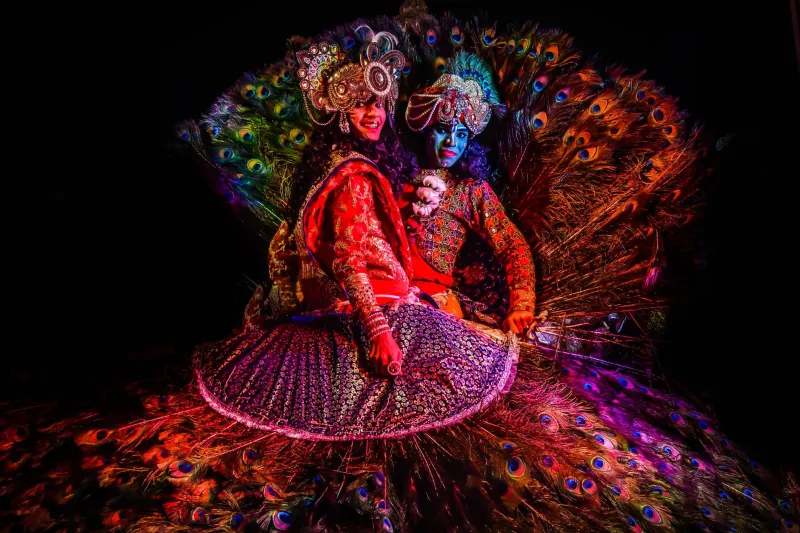
Let me tell you what Bollywood already knows that Broadway is just figuring out.
Story told through music doesn't need justification. Emotion expressed in movement is not excess — it's precision. A villain who gets a show-stopping number isn't a cliché; he's a necessity. And an audience that weeps and cheers and sings along is not undiscerning. They are, in fact, the whole point.
For roughly a century, American musical theater has operated on these exact principles — and done extraordinary things with them. But it has also, for most of that century, looked at the world through a remarkably narrow cultural lens. The stories told on Broadway stages, the composers filling those orchestra pits, the directors shaping those narratives — they have skewed, with very few exceptions, in one particular direction.
That is changing. Slowly, imperfectly, but genuinely. And South Asian artists are at the center of that change in ways that deserve a lot more attention than they're currently getting.
Two Traditions, One Impulse
Before we talk about what's happening right now, it's worth pausing on why the Bollywood-Broadway connection feels so natural once you actually look at it.
Both traditions are built on the same foundational conviction: that the highest form of storytelling integrates song, dance, spectacle, and emotion into something that transcends any single element. In Bollywood, a character breaks into song not because the script has run out of dialogue, but because the emotional stakes have exceeded what dialogue can carry. In musical theater, the same logic applies — the song arrives when the feeling is too large for speech.
The difference has always been cultural vocabulary, not theatrical philosophy. And as those vocabularies increasingly mix — through diaspora communities, through digital media, through a generation of artists trained in both traditions — the overlap is becoming impossible to ignore.
"When I'm staging a musical number, I'm thinking about rhythm and space and emotion in exactly the same way whether I'm working on a Hindi film sequence or a Broadway scene," says Arpita Mukherjee, a New York-based director who has worked in both Indian and American theater. "The grammar is different. The impulse is identical."
The Representation Problem — and the Slow Fix
Here's the honest part of this conversation: Broadway's relationship with South Asian representation has been, to put it charitably, a work in progress.
For years, the few South Asian characters who appeared on American stages were supporting roles at best, caricatures at worst. The exotic backdrop. The comic relief. The wise elder with an accent played, sometimes, by someone who wasn't South Asian at all. It was the kind of representation that felt worse than absence — a funhouse mirror rather than a window.
The shift began quietly, in off-Broadway and regional theater spaces where risk tolerance is higher and institutional gatekeeping is somewhat less calcified. South Asian playwrights started getting productions. Composers with Indian classical training started scoring American shows. Performers who'd been told to "neutralize" their accents started insisting on their own voices.
"I spent the first decade of my career being told I was 'too specific,'" says Vikram Nair, a composer whose work has been staged at theaters in Chicago and Washington, D.C. "Too Indian, too niche, too much. And then suddenly the same specificity became the thing people wanted. Nothing about my work changed. The industry's appetite did."
That appetite shift is real, even if it's uneven. Productions like Monsoon Wedding: The Musical — adapted from Mira Nair's beloved film — represent a genuine step toward centering South Asian stories rather than tokenizing them. The show's development process, which involved extensive collaboration with Indian artists and communities, offers a model for how this kind of cultural bridge-building can be done with integrity.
What Bollywood Brings to the Stage
It's worth being specific about what South Asian theatrical traditions actually contribute to this conversation, because "Bollywood influence" can mean a lot of different things.
At the most surface level, it means visual spectacle — the elaborate costumes, the choreography that treats the entire body as an expressive instrument, the color palette that refuses to be subtle. Broadway has always loved spectacle, so this part of the exchange tends to be welcomed enthusiastically, sometimes to the point of fetishization.
But the deeper contribution is structural. Indian classical and folk music traditions bring rhythmic complexity — the layered talas of Carnatic music, the call-and-response patterns of folk forms — that can push Western musical theater composition into genuinely new territory. Composers like Vishal Bhardwaj, who has adapted Shakespeare for Indian cinema with startling success, demonstrate how these traditions can hold and transform familiar stories.
And then there's the storytelling philosophy itself. Bollywood has never been embarrassed by melodrama. It understands that heightened emotion, expressed without irony, is not naivety — it's a different kind of sophistication. American theater, which spent several decades in a love affair with postmodern distance and knowing winks, is increasingly hungry for that directness.
"Audiences are tired of being told that sincerity is unsophisticated," says Priya Anand, a performer who has worked in both classical Bharatanatyam and contemporary American dance theater. "When you do a piece that asks people to just feel something, without the protective layer of irony, they respond. Every time."
The Road to the Main Stage
None of this is to suggest that the work is done. Broadway's economics — the brutal cost of mounting a production, the conservative instincts of investors, the outsized influence of a small number of critics — still create enormous barriers for work that doesn't fit established formulas.
South Asian producers with the resources and relationships to push projects to the main stage remain rare. The pipeline for desi performers — from training programs to casting directors to agents — still has significant gaps. And there's a legitimate ongoing debate within South Asian artistic communities about whether the goal should be integration into Broadway's existing structures or the building of parallel institutions that don't require that permission.
Both approaches are valid. Both are happening.
What feels genuinely new is the confidence with which South Asian artists are approaching these questions. The generation currently coming up — trained in multiple traditions, connected to global South Asian audiences through digital platforms, unburdened by the particular anxieties of earlier immigrant generations — is not asking for a seat at the table. They're building new tables and inviting everyone to come sit.
Broadway, for its part, would be wise to show up.
This is an opinion piece and reflects the views of the author. We'd love to hear your take — is Broadway doing enough to embrace South Asian stories? Sound off in the comments or hit us up on social @danbhai.