Pause, Rewind, Repeat: How Desi Parents in America Finally Found Their Bollywood Groove
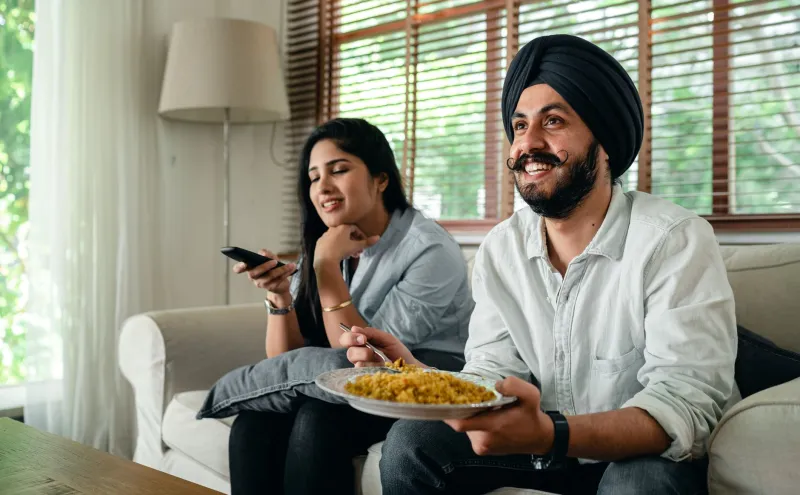
There's a specific kind of Sunday afternoon that every South Asian American kid grew up knowing. The living room smells like tadka. A grainy VHS tape — or later, a pirated DVD from the Indian grocery store — is playing something with Shah Rukh Khan in it. Your parents are glued to the screen, laughing at jokes you half-understand, crying at scenes you definitely don't. Bollywood was always their thing, even when you were right there in the room with them.
Fast forward to 2024, and something has quietly, dramatically shifted. Your mom is texting you about Animal. Your dad has a Netflix profile. Your auntie in New Jersey is live-tweeting the Heeramandi premiere. The desi parents of America — the same generation that used to rely on neighborhood video rental shops and shaky satellite dishes — are now full-on streaming power users. And honestly? We're here for it.
The Old Way Was a Whole Operation
Before we talk about the glow-up, let's pay respect to the hustle. First-generation immigrants who came to the US in the '80s, '90s, and early 2000s didn't exactly have a convenient pipeline to back-home entertainment. Sunita Mehta, a 58-year-old accountant living outside Chicago, remembers it vividly.
"We would wait for someone to visit India and bring back VHS cassettes," she told us, laughing. "Sometimes the quality was so bad you could barely see the faces. But we didn't care. It was a connection to home."
That connection mattered enormously. For immigrants navigating a culture that didn't always make space for them, Bollywood wasn't just entertainment — it was emotional sustenance. It was the sound of their mother tongue, the familiar cadence of a filmi song, the comfort of seeing faces that looked like theirs on a screen.
But access was patchy and frustrating. Local Indian TV channels helped, but programming was limited. The internet existed, but streaming wasn't yet a thing. YouTube was revolutionary when it arrived, but full films were a gray area at best.
Then Streaming Changed the Game
The arrival of platforms like Netflix, Amazon Prime Video, and later Disney+ Hotstar in the US market didn't just give desi parents more content — it gave them agency. Suddenly, they weren't waiting for someone to bring back a DVD from a trip abroad. They weren't squinting at a blurry upload on a sketchy website. They had on-demand access to new releases, classic films, and original Indian content, all in one place.
"I remember the first time I watched a new Bollywood movie on the same weekend it released in India," said Rajesh Nair, 62, a retired engineer in the Dallas area. "I called my brother in Mumbai right after. We talked about it for an hour. It felt like we were in the same city again."
That real-time connection is something that gets overlooked in broader conversations about streaming. For diaspora communities, watching the same content simultaneously as family back home isn't just convenient — it's a form of belonging. It collapses the distance between here and there in a way that a phone call alone never quite could.
Hotstar in particular has become a kind of cultural lifeline. With its deep catalog of Indian content — films, TV serials, IPL cricket, reality shows — it functions less like a streaming service and more like a portal. "It's the first thing I open in the morning," admitted Priya Chandrasekaran, 55, a teacher in the Bay Area. "Sometimes even before the news."
The WhatsApp Effect
Streaming platforms didn't work alone. Social media — and specifically WhatsApp — became the connective tissue that turned individual viewing into a communal experience.
Family group chats transformed into de facto film clubs. Someone watches Rocky Aur Rani Kii Prem Kahaani, sends a voice note about Jaya Bachchan's performance, and suddenly fifteen relatives across four time zones are all watching it that weekend. Memes get shared. Song clips circulate. Old debates about who the greatest Bollywood hero of all time is get reignited at 11 p.m. on a Tuesday.
"My sister in London and I watch the same show and message each other the whole time," said Sunita. "It's like we're sitting together on the sofa. That never used to be possible."
YouTube has also played a quietly massive role. Reaction videos, film analysis channels, and music uploads have given first-gen parents a way to engage with Bollywood content beyond just passive watching. Some have even become surprisingly savvy about following their favorite composers or directors online.
The Generation Gap — and Where It Narrows
Here's the interesting wrinkle: as desi parents have gotten more plugged in, the generational divide around Bollywood hasn't disappeared — but it has gotten more complicated.
For years, the dynamic was simple. Parents loved Bollywood. Kids were ambivalent, sometimes embarrassed, often caught between two cultures. But now, with Indian music crossing over into global charts and Bollywood aesthetics popping up everywhere from fashion runways to TikTok trends, the second generation is circling back.
"My daughter actually recommended Mirzapur to me," said Rajesh, still sounding a little amazed. "She watched it with her American friends at college. I didn't expect that."
These moments of reversal — where kids are bringing content to their parents rather than the other way around — are becoming more common. And they're opening up conversations that might not have happened otherwise. Conversations about language, about history, about what it means to be South Asian in America.
Staying Tethered to Something Real
At the core of all of this — the streaming subscriptions, the WhatsApp threads, the shared watch parties — is something deeply human. For first-generation immigrants, Bollywood was never just movies. It was a piece of home they carried with them across oceans and decades.
Technology didn't create that connection. It just made it easier to hold onto.
"When I watch an old film — even something from the '70s — I feel like my mother is sitting next to me," said Priya quietly. "She passed away a few years ago. But the songs she used to sing are all there, on YouTube, whenever I want them."
If that's not a reason to keep the streaming subscription active, we don't know what is.
Got a story about how your family watches Bollywood together across borders? Drop us a message at DanBhai — we want to hear it.