From Baraat to Budget-Conscious: How Desi Americans Are Quietly Rewriting the Wedding Rulebook
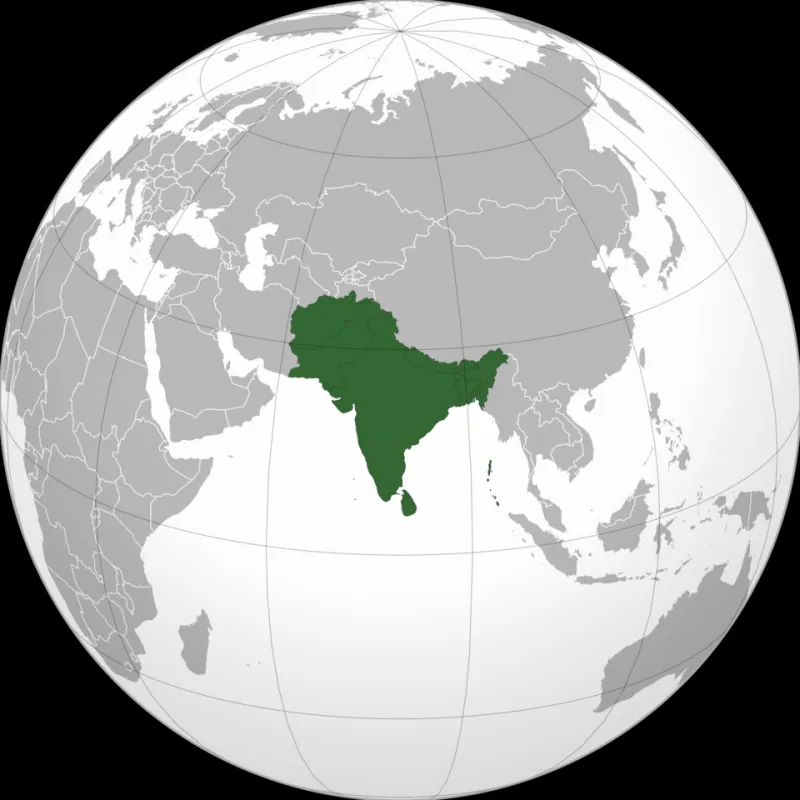
Photo: DrQuantum, CC BY-SA 3.0, via Wikimedia Commons
For a long time, the blueprint was basically non-negotiable. You find someone (hopefully before your aunties lose their minds), you book a banquet hall that could comfortably seat a small nation, you order enough biryani to feed it, and you spend somewhere between $200,000 and half a million dollars making sure every single moment looks like a deleted scene from Dilwale Dulhania Le Jayenge. That was the Desi wedding in America. Full stop.
Except — it's not anymore. Not quite.
Across the US, a quiet but unmistakable shift is happening inside South Asian communities. Second-generation Desi Americans are still showing up for the culture. They still want the color, the music, the emotion. But a growing number of them are pushing back hard against the financial and logistical avalanche that the traditional "big fat desi wedding" has become.
The Number That Stopped the Party
Let's talk dollars for a second, because the math has gotten genuinely staggering. According to wedding industry data, the average South Asian American wedding now costs between $65,000 and $500,000 — with many multi-day affairs landing closer to the top of that range once you factor in venue, catering, jewelry, designer outfits for every single function, and the inevitable last-minute additions your mom insists are "absolutely necessary."
For a generation carrying student loan debt, navigating a brutal housing market, and rethinking what financial security even looks like post-pandemic, those numbers hit differently.
"My parents kept saying it's an investment in family honor," says Priya, a 29-year-old physician's assistant based in the Chicago suburbs who got married last year. "But I kept thinking — whose honor? And at what cost? My husband and I were looking at $400K for one weekend, and we just couldn't justify it when we're trying to buy a house."
Priya and her husband ended up hosting a 120-person celebration at a converted warehouse in the West Loop, with a local South Asian catering company, a curated Spotify-meets-live-dhol soundtrack, and outfits sourced from a combination of family heirlooms and a Dallas-based sustainable bridal boutique. Total cost: around $40,000. Her Instagram looked just as gorgeous as anyone's $300K wedding. Her bank account looked a lot healthier.
TikTok Told Them It Was Okay
Here's something the older generation didn't have: a community-wide permission slip delivered via short-form video. TikTok and Instagram Reels have become genuinely transformative spaces for young Desi Americans to see alternatives modeled in real time — and to realize they're not alone in wanting something different.
Creators like @desibride_diaries and a handful of South Asian wedding planners-turned-content-creators have built massive followings specifically by showcasing intimate ceremonies, DIY mehndi parties, and "micro-weddings" that prioritize meaning over magnitude. Comments sections on these videos read like group therapy sessions, full of relief and recognition from people who thought they were the only ones quietly dreading the traditional route.
"Social media gave people language for what they were already feeling," says Meena Srinivasan, a Houston-based wedding planner who's seen her clientele shift noticeably over the past three years. "Before, couples would come in embarrassed to say they had a tight budget. Now they come in proud of it. They've seen enough content to know that a smaller, intentional wedding can be just as beautiful — maybe more so."
The Pandemic Pivot That Stuck
COVID-19 didn't just shrink weddings temporarily. For many Desi Americans, it permanently recalibrated what felt essential versus excessive. When couples who'd been forced into intimate 20-person ceremonies during lockdown started sharing their experiences, something unexpected happened: a lot of them said it was actually... better.
Less chaos. More presence. Fewer performative moments for distant relatives you see once a decade, and more genuine connection with the people who actually matter.
That revelation didn't evaporate when restrictions lifted. It lodged itself in the cultural conversation and refused to leave.
"We had our nikkah with just immediate family on Zoom during COVID, and then a small celebration the following year," recalls Farrukh, a 32-year-old software engineer in the Bay Area. "People kept telling us we'd regret not doing the 'real' thing. Honestly? I regret nothing. We put the money toward a down payment instead."
Honoring Culture Without Bankrupting Yourself
It would be too easy — and frankly a little lazy — to frame this as young Desis rejecting their culture. That's not what's happening. If anything, the couples rewriting the rulebook tend to be deeply thoughtful about which traditions they're keeping and why.
The trend isn't minimalism for minimalism's sake. It's intentionality. It's choosing the garba over the elaborate floral installation that costs $15,000 and gets photographed for ten minutes. It's flying in a beloved family pandit instead of hiring a celebrity MC. It's wearing your mother's vintage Banarasi saree instead of a brand-new designer lehenga that'll sit in a box forever.
Sustainability is also entering the conversation in ways it simply wasn't five years ago. Younger Desi Americans are increasingly aware of the environmental footprint of large-scale events — the food waste from 500-person dinners, the single-use décor, the carbon cost of flying in relatives from three continents. Some couples are actively working with vendors who prioritize eco-conscious practices, a niche that barely existed in South Asian wedding planning a decade ago.
"My clients are asking questions I never got before," says Meena. "Can we donate leftover food? Can we rent the centerpieces instead of buying? Can we use a venue that runs on solar? It's a whole different mindset."
The Family Negotiation (Still Messy, Still Real)
None of this happens without friction. Let's be honest — the multigenerational tension around weddings is very much alive, and no amount of TikTok validation makes those dinner-table conversations easy.
For many second-gen couples, the wedding negotiation is really a proxy battle for a much bigger question: whose definition of success are we living by? Parents who sacrificed enormously to build a life in America often see the big wedding as a legitimate, hard-earned milestone — proof of arrival, a gift to the community, a moment of joy that justifies years of struggle.
That's not nothing. And the couples navigating this most gracefully seem to be the ones who acknowledge that weight rather than dismissing it.
"I had to sit with my parents and really explain that this wasn't about rejecting our culture," says Priya. "It was about making sure our marriage started on solid ground. Once they understood it that way, they actually came around. My mom ended up being the one who found the catering company."
What the Dream Actually Looks Like Now
The Bollywood wedding industrial complex isn't going anywhere. The $500K celebration will still happen, and honestly, for some families it makes complete sense — financially, culturally, joyfully. There's no singular right answer here.
But the monopoly that version of the wedding held over Desi American imagination? That's cracking. And what's emerging in its place feels genuinely exciting: weddings that are personal, considered, and culturally rich without being financially ruinous.
The dream is getting a makeover. And from where we're standing at DanBhai, it's looking pretty good.