Brown Skin, Finally Seen: The Slow But Real Shift in Beauty Advertising
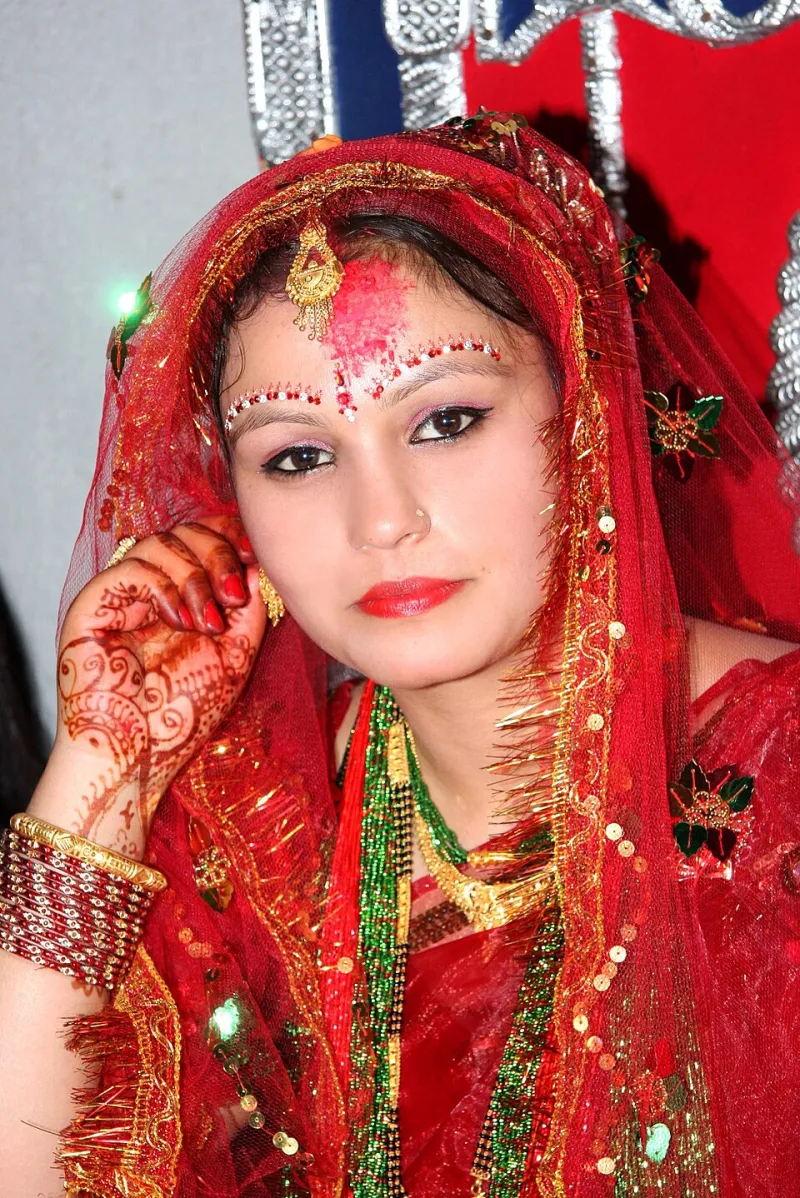
Photo: Nirmal Dulal, CC BY-SA 3.0, via Wikimedia Commons
Let's set the scene. You're 16, standing in a Sephora, trying to find a foundation that doesn't make you look like you've been lightly dusted with chalk or, alternatively, like you've been tangoed. The shade range goes from "porcelain" to "warm beige" and then takes a mysterious leap to "deep ebony" with almost nothing in between. You leave empty-handed. Again.
If you're a Desi American woman of basically any generation, some version of this story is yours. The beauty industry's relationship with South Asian skin tones has historically ranged from actively exclusionary to well-meaning-but-clueless. But something is changing — and the Desi women who've been calling this out for years are at the center of it.
The Rihanna Effect (Yes, We're Going There)
It would be impossible to talk about the shift in beauty industry representation without acknowledging what Fenty Beauty did in 2017. Forty shades at launch wasn't just a product decision — it was a market correction that exposed how little the industry had bothered to try. And it gave everyone, including South Asian consumers, a new baseline expectation: you should be able to find your shade.
For Desi Americans specifically, the Fenty moment was significant not just because the range finally included their undertones — those warm, golden, olive, and deep brown complexions that had been chronically underserved — but because it made the demand visible. Suddenly brands couldn't pretend the market didn't exist.
"Before that, I genuinely thought the problem was me," says Kavya, a beauty content creator based in Los Angeles with over 200,000 followers across platforms. "Like, maybe I just had a weird skin tone that didn't match anything. And then Fenty came out and I found my shade in like two minutes. That was a whole moment."
Who's Actually Getting It Right
Progress in beauty advertising representation isn't just about shade ranges — it's about how South Asian women are featured when they do appear. And the distinction matters enormously.
There's a version of South Asian representation in beauty advertising that's essentially exoticization with better lighting: the woman with a bindi who exists to signal "ethnic" without any real cultural context, the campaign that leans entirely on henna and saris while the actual product is marketed toward a white audience. Desi consumers clock this immediately, and they talk about it.
Then there's the version that's actually landing. Brands like Rare Beauty, Kay Beauty (Katrina Kaif's line, which has found a real following among diaspora consumers in the US), and increasingly mainstream players like MAC and Charlotte Tilbury have been recognized by Desi beauty influencers for featuring South Asian women as part of their standard campaign imagery — not as a special "diversity" moment, but just as part of the visual language of the brand.
"The difference is whether we're the feature or the footnote," says Meera, a New York-based makeup artist who works in both editorial and commercial spaces. "When a brand puts a South Asian woman in their campaign and she's just there, wearing the lipstick, looking incredible, not performing her ethnicity — that's the goal. That's what it looks like when it's working."
The Influencer Pipeline
A huge part of why this shift is happening at all comes down to the rise of Desi beauty influencers who've built massive audiences by doing exactly what the mainstream industry wasn't: showing South Asian skin tones being celebrated, demonstrating how products actually perform on deeper complexions, and creating a community around beauty that finally felt like it included them.
Creators like Hindash, Deepica Mutyala (whose viral under-eye hack using red lipstick genuinely changed the game), and a growing roster of TikTok and YouTube voices have demonstrated that there's an enormous, engaged, and frankly loyal audience here. Brands have noticed. Partnerships with Desi influencers have gone from rare to routine over the past three or four years, and while not every collaboration is authentic, the volume itself signals a market recognition that didn't exist a decade ago.
"I used to pitch brands and get ignored," says Preethi, a Dallas-based beauty creator who's been posting since 2018. "Now they come to me. That's wild to say out loud, but it's true. And part of my job now is being selective — making sure the brands I work with actually have products that work for my skin and my community, not just using me as a diversity checkbox."
Where the Gaps Still Are
Here's the thing though: progress isn't the same as arrival. For every brand that's genuinely expanded its visual vocabulary to include South Asian women, there are still plenty operating on a "one brown face per campaign" quota system that feels more like optics management than actual inclusion.
The skincare category, in particular, still has significant blind spots. Products marketed for "brightening" or "evening skin tone" have a complicated history in South Asian markets, often playing into colorism narratives that run deep in the culture. How American brands navigate that — whether they're thoughtful about it or blundering into it — tells you a lot about how seriously they're engaging with South Asian consumers as a community rather than just a demographic.
There's also the question of South Asian men in beauty advertising, a conversation that's barely started. The growing market for men's grooming products among Desi American men is largely unaddressed in mainstream advertising, even as it's a very real spending category.
What Young Desi Americans Are Actually Feeling
For Gen-Z Desi Americans who grew up with social media as their primary beauty education, the impact of seeing themselves reflected — or not — in beauty culture runs deep. This isn't a trivial vanity conversation. It's about whether mainstream consumer culture treats you as someone worth marketing to, worth designing for, worth seeing.
The shift that's happening right now, however uneven, is genuinely meaningful to this generation. And they're not passive recipients of it — they're actively shaping it through the content they create, the brands they champion, and the ones they very publicly call out when the execution falls flat.
The beauty industry is learning, slowly and sometimes reluctantly, that Desi Americans don't just want to be included. They want to be seen accurately, celebrated honestly, and marketed to with the same intelligence and care as everyone else.
Anything less? They'll tell you about it. Loudly. On TikTok.