They're Not Waiting for the Algorithm: How Desi Gen-Z Is Taking South Asian Music Into Its Own Hands

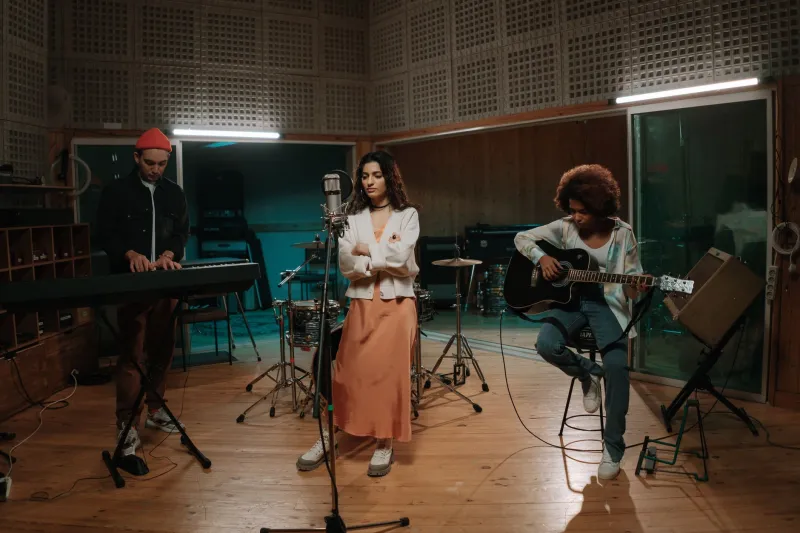
Photo: K-POPIT 케이팝잇, CC BY 3.0, via Wikimedia Commons
Here's a quick experiment. Open Spotify. Search for a non-film Hindi song from an independent artist — something that didn't come attached to a major Bollywood release. Now check how easy it was to find. Check how the algorithmic recommendations responded. Notice whether it ended up in any curated editorial playlists.
If your experience was anything like what most Desi Americans describe, the answer is: not easy, not great, and probably not. The major streaming platforms have made enormous strides in global music discovery, but South Asian music — particularly anything that exists outside the Bollywood industrial complex — has historically fallen into a weird algorithmic gap. Too niche for mainstream pop playlists, too mainstream (culturally speaking) to be treated as world music, and too linguistically diverse to be easily categorized.
Desi Gen-Z has decided to stop waiting for the platforms to solve this. They're solving it themselves.
The Playlist as Political Act
It sounds dramatic, but hear it out. When a 22-year-old Desi American in Atlanta builds a Spotify playlist of Tamil indie artists and shares it with her 3,000 followers, she's doing something that has real downstream consequences. Streams add up. Save rates signal to algorithms. Playlist followers create a network effect. What starts as a personal curation project becomes, at scale, a genuine force in how music gets surfaced and recommended.
This is exactly what's been happening across platforms over the past few years, and it's not accidental. There's a loose but real community of Desi Gen-Z music curators who are consciously thinking about streaming strategy — who understand that the algorithm rewards engagement, that saves matter more than passive plays, and that coordinated sharing within community networks can punch well above its weight.
"I learned pretty quickly that making a good playlist wasn't enough," says Rajan, a 24-year-old based in the Bay Area who runs several South Asian music playlists on Spotify with a combined following of over 15,000. "You have to actually get people to save it, to follow it, to come back. That's what moves the needle. I treat it like a small media project, honestly."
Beyond Bollywood: The Full Spectrum
One of the most significant things about this movement is what it's choosing to amplify. Yes, Bollywood film soundtracks are part of the picture — but the more interesting action is happening in the spaces the mainstream industry ignores.
Tamil indie music, which has a thriving scene largely invisible to non-Tamil audiences, is finding new listeners through diaspora curators who are specifically trying to bridge that gap. Punjabi music that exists outside the bhangra-pop export lane — more experimental, more rooted, less produced for Western palatability — is getting playlisted. Bengali folk fusion, Carnatic jazz crossover, Urdu poetry set to electronic production: the range of what Desi Gen-Z curators are championing is genuinely exciting and genuinely diverse.
"There's this assumption that Desi music means Bollywood item numbers or bhangra wedding songs," says Ananya, a 20-year-old Bengali American student in Boston who curates playlists focused on Bengali and fusion artists. "And those are great, but that's like saying American music means pop radio. There's so much more. I want people to hear the more."
TikTok as the New Radio
If Spotify playlists are the long game, TikTok is where the sparks actually catch. The platform's role in breaking South Asian music to non-South Asian audiences has been well documented — Sidhu Moosewala's reach in the US expanded dramatically through TikTok, as did several Tamil film songs that became inexplicably viral among audiences who couldn't tell you a single word of the lyrics.
But what's less discussed is how Desi Gen-Z creators are deliberately using TikTok as a music discovery vehicle within their own community. Short video clips using deep cuts from independent South Asian artists — not the obvious Bollywood hits, but the B-sides, the indie releases, the regional music that doesn't get mainstream push — function as a kind of recommendation engine that bypasses the algorithm entirely.
A 30-second cooking video set to an obscure Ilaiyaraaja track can do more for that song's streaming numbers than months of organic algorithm work. And the creators doing this know it.
"I pick music intentionally," says Sana, a 23-year-old content creator in Chicago whose cooking and lifestyle videos consistently feature South Asian music from outside the mainstream. "Every song I use in a video, I think about whether I want to introduce people to something they haven't heard. It's like DJing, kind of. You're programming people's taste."
What It Means for the Industry
Here's where it gets genuinely interesting from an industry perspective. Streaming data doesn't just measure popularity — it increasingly creates it. Labels and music supervisors look at streaming numbers, save rates, and playlist placement to make decisions about which artists to sign, which songs to invest in, and which sounds are worth developing.
If Desi Gen-Z curators are successfully driving streams for independent South Asian artists, they're not just helping those artists find listeners. They're potentially influencing what gets greenlit next. They're feeding data back into a system that uses that data to decide what the future of South Asian music in America looks like.
That's a meaningful amount of power for a community of largely unpaid playlist curators operating out of their dorm rooms and apartments. And the more sophisticated among them are aware of it.
"The labels watch this stuff," says Rajan. "I've had artists reach out to me because a playlist I made got their song in front of people who ended up sharing it. And then a label noticed the numbers. It's all connected. The playlist is the first domino."
The Community Behind the Curation
What makes this movement sustainable isn't just individual curators doing their thing in isolation — it's the community infrastructure that's built up around it. Discord servers where Desi music fans share new discoveries. Reddit threads dedicated to regional South Asian music. Instagram accounts that function as editorial outlets for South Asian indie music criticism. Group chats that circulate new releases before they hit any playlist.
This is grassroots music culture doing what it's always done: building the infrastructure that the mainstream hasn't bothered to build, because the mainstream didn't think the audience was there.
The audience was always there. They were just waiting for someone to show up with the right playlist.
Looks like they decided to make it themselves.